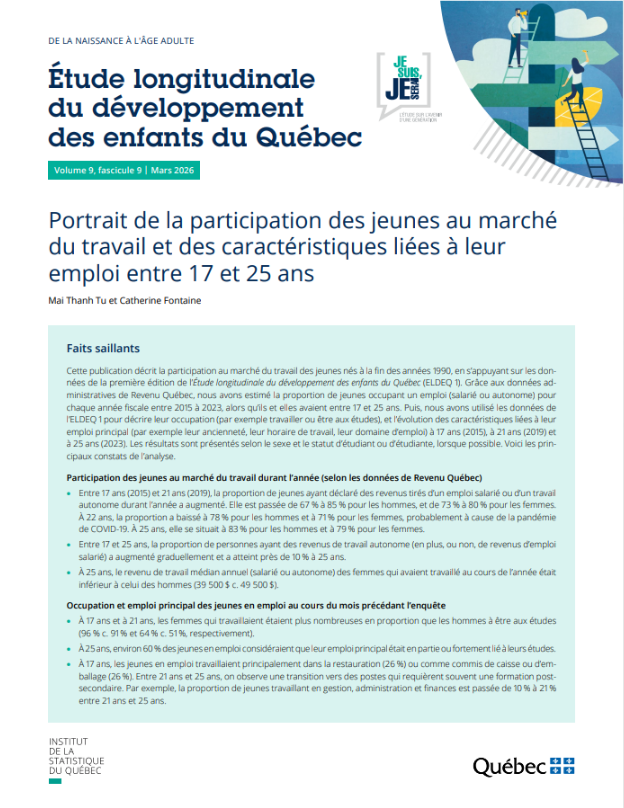
New analysis: Bien-être au travail à 25 ans : associations avec les facteurs personnels et professionnels (in French only)
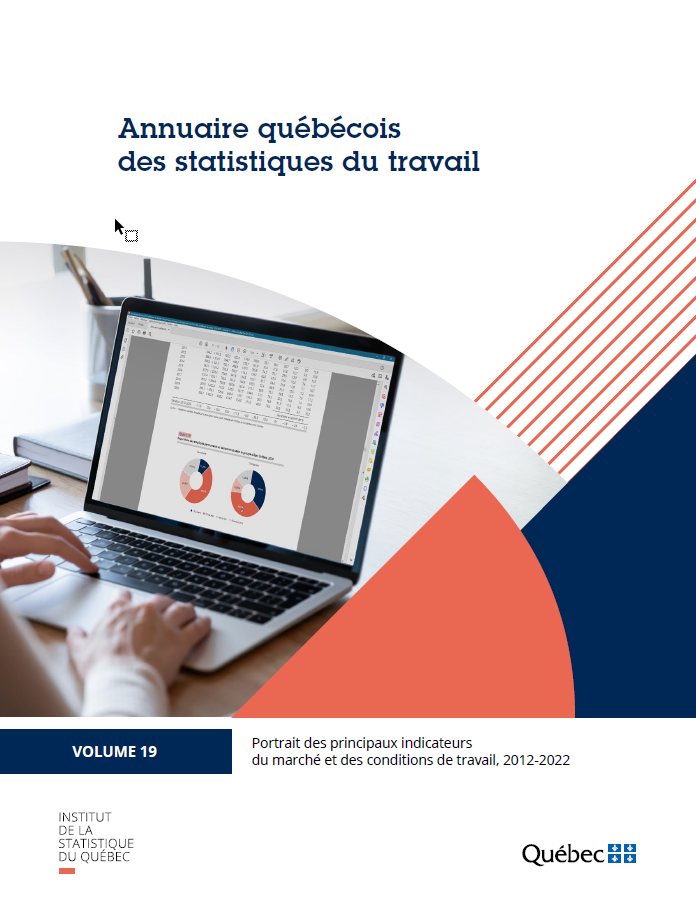
Portrait de l'état du marché du travail ainsi que des conditions de travail (emploi, chômage, taux d'activité et d'emploi, population active et population en âge de travailler, rémunération et durée du travail). Avis de révision
Trends in employment according to various criteria, including personal characteristics, economic sectors, work pattern and class of worker. It also analyzes the main labour market indicators and provides a brief analysis of earnings and hours of work.
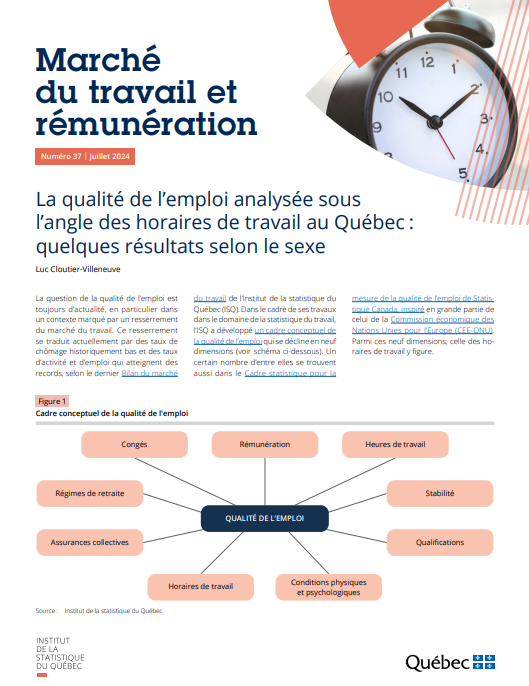
Le taux d’heures variables de travail fournit des informations sur l’instabilité potentielle des heures de travail chez les personnes occupant des emplois, 1998-2025.
Data on usual working hours, Québec, Ontario and Canada, 1976-2025.
Actual and usual work hours, hours of absence due to vacation and statutory holidays, illness or disability, personal or family obligations, and paid and unpaid overtime.
En 2023, environ 50 % des hommes et 45 % des femmes de 15 à 24 ans occupaient un emploi dont les heures de travail variaient d’une semaine à l’autre.
Comparisons regarding telework use by sex, age group, education level, hourly earnings, union coverage, establishment size, job characteristics, and administrative region. Comparisons between Québec and certain provinces are also provided.
Publication containing a multitude of indicators related to demographics, material living conditions, work, retirement, lifestyle, health and well-being, and social participation of seniors.
From 1998 to 2021, the women’s-to-men’s hourly earnings ratio increased from 83.4% to 90.8% in Québec. The number of paid jobs also rose by more than one million, with women benefiting the most from this increase (+535,000 vs. +475,000).