Short highlights and data are presented in the form of graphs to provide a better understanding of the situation of young people in Québec. Update: Discrimination ou traitement injuste.
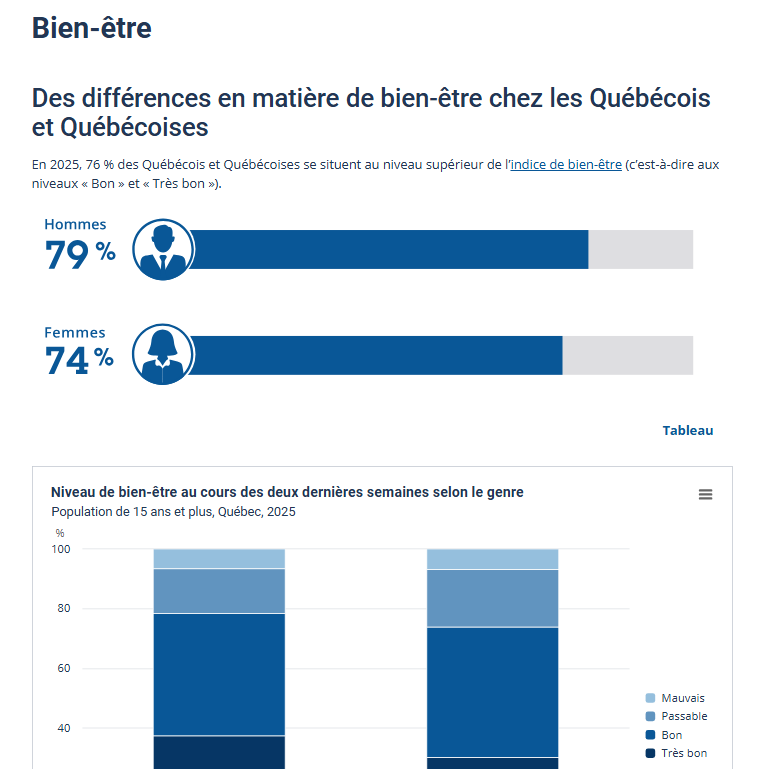
En 2025, 76 % des Québécois et Québécoises se situent au niveau supérieur de l’indice de bien-être.
Physical activity for transportation, leisure-time physical activity, alcohol consumption and well‑being and loneliness.
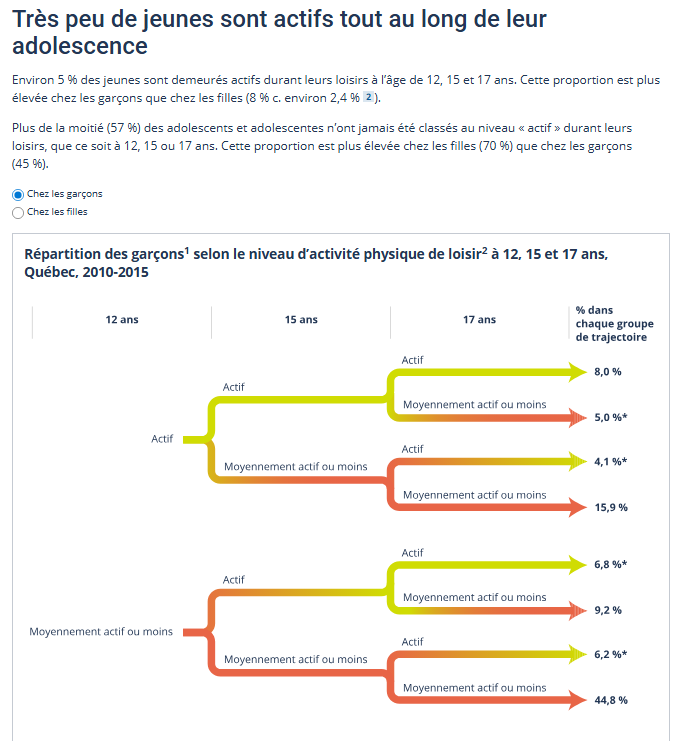
De quelle façon le niveau d’activité physique de loisir a-t-il évolué durant l’adolescence et au début de l’âge adulte?
In 2025, 17% of people used cannabis, up from 14% in 2018, before legalization.
Près d’un ménage sur cinq (19 %) était en situation d’insécurité alimentaire au Québec en 2023, soit environ 733 900 ménages.
Nouvelle analyse : La santé des tout-petits d’environ deux ans et demi et son évolution depuis la naissance
How is the health of the English-speaking population in Québec? How does it compare to the health of other language groups, especially the majority francophone group?
Concise information on the results of analyses on specific aspects of health in Québec for various population groups regarding a wide range of topics including lifestyle habits, chronic diseases, and care and services.
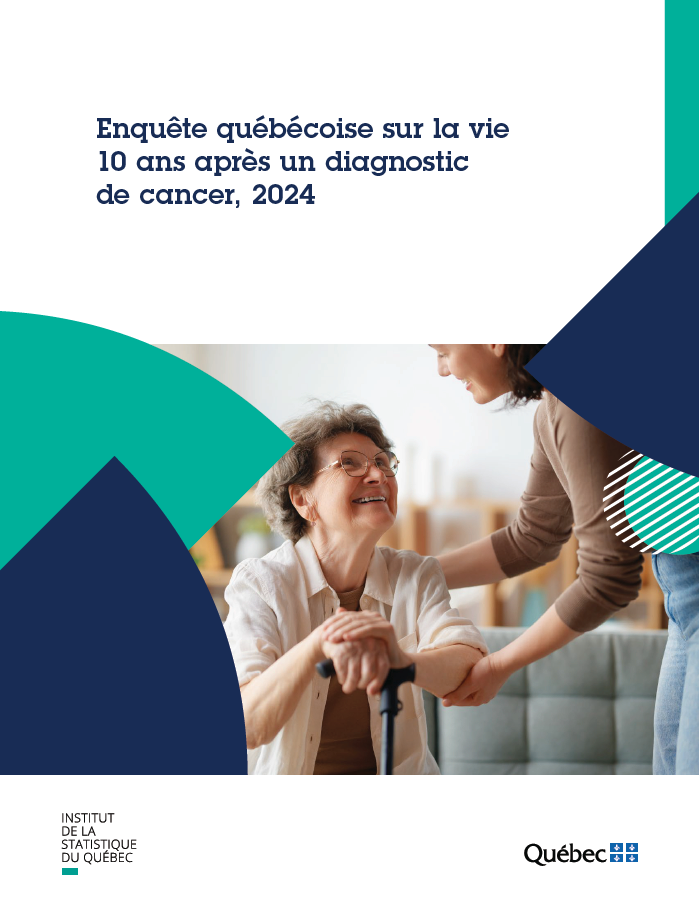
How are people doing 10 years after being diagnosed with cancer?