Released: March 19, 2024
The results presented on this page are based on the first data from the Growing Up in Québec study, which were collected among 4,703 families of babies aged about 5 months between May 2021 and March 2022. This study aims to better understand the factors that can influence the development and well-being of Québec children born in the early 2020s. To that end, a cohort of children born between October 1, 2020 and September 30, 2021 to mothers living in Québec will be followed until adulthood.
Growing Up in Québec is the second edition of the Québec Longitudinal Study of Child Development (QLSCD 2). The first edition of the study (QLSCD 1) has been following a cohort of children born in Québec in 1997–1998 for more than 25 years.
On this page:
Most 5-month-old babies live with both of their parents
About 1 in 5 babies live in low-income households
Most 5-month-old babies live with both of their parents
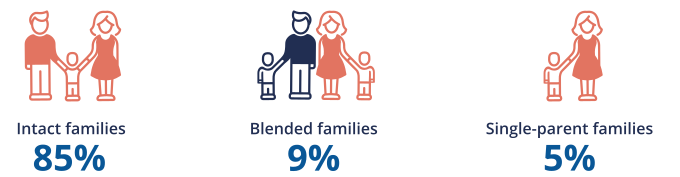
At 5 months, the majority (94%) of babies were living with both of their biological, legal, or adoptive parents, including all babies living in intact families and almost all babies living in blended families.
41% of babies were not living with any other children aged 0 to 17; nearly 36% were living with one other child; and 23% with at least two other children.
The average age of mothers and fathers at the birth of their child was 31.3 years and 34.0 years, respectively.
At least one of the two parents (or the single parent) of nearly a third of babies (32%) was born outside Canada.
For about 16% of babies, French was not one of the languages spoken most often at home.
About 1 in 5 babies live in low-income households
Nearly 21% of babies aged about 5 months lived in low-income households; 41% in mid-low-income households; and 38% in mid-high or high-income households.
About 8% of babies lived in a family that had run out of money to buy food at some point in the 12 months before the survey, and about 11% lived in a family that had run out of money to pay the rent or mortgage.
The fathers of about 83% of babies and the mothers of 4.8% of babies were working at the time of the survey.
2 in 3 babies live in homeowner households
67% of babies lived in homeowner households, while 33% lived in renter households.
Approximately 8% of babies moved between their birth and the age of about 5 months.
About 10% of babies lived in a dwelling considered overcrowded.
Nearly 22% of babies lived in a dwelling with at least one health risk (mould, musty or earthy odours, or rodents or insects) in the 12 months before the survey.
About 74% of babies lived in urban areas (100,000 people or more); 1 in 10 babies (10%) lived in semi-urban areas (more than 10,000 people but less than 100,000); and 16% lived in rural areas (less than 10,000 people).
The living environment of babies, more than 20 years later
How has the living environment of 5-month-old babies changed between the two editions of the QLSCD?
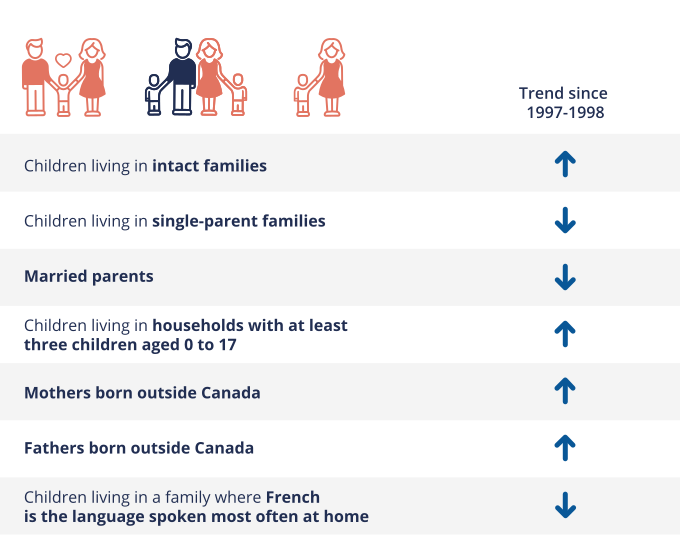
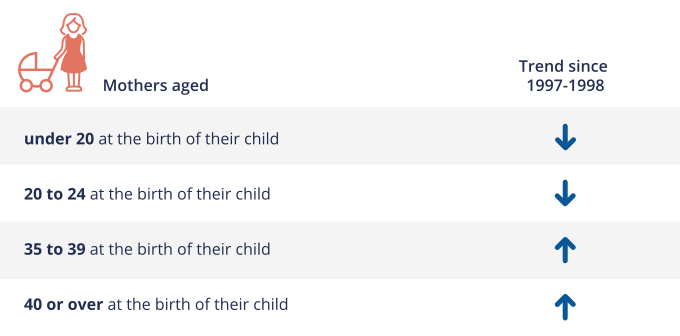
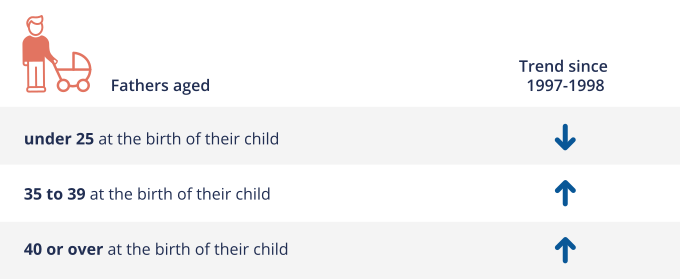
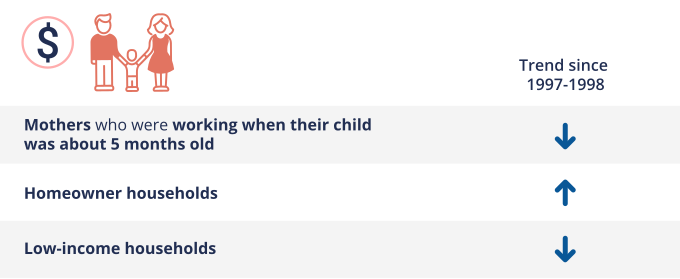
Note: Proportion of babies born in 2020-2021 significantly higher (↑) or lower (↓) than the proportion of babies born in 1997-1998.
Evolution since 1997-1998
Children living in intact families: significantly higher proportion of babies
Children living in single-parent families: significantly lower proportion of babies
Married parents: significantly lower proportion of babies
Children living in households with at least three children aged 0 to 17: significantly higher proportion of babies
Mothers born outside Canada: significantly higher proportion of babies
Fathers born outside Canada: significantly higher proportion of babies
Children living in a family where French is the language spoken most often at home : significantly lower proportion of babies
Mothers aged under 20 at the birth of their child: significantly lower proportion of babies
Mothers aged 20 to 24 at the birth of their child: significantly lower proportion of babies
Mothers aged 35 to 39 at the birth of their child: significantly higher proportion of babies
Mothers aged 40 or over at the birth of their child: significantly higher proportion of babies
Fathers aged under 25 at the birth of their child: significantly lower proportion of babies
Fathers aged 35 to 39 at the birth of their child: significantly lower proportion of babies
Fathers aged 40 or over at the birth of their child: significantly higher proportion of babies
Mothers who were working when their child was about 5 months old: significantly lower proportion of babies
Homeowner households: significantly higher proportion of babies
Low-income households: significantly lower proportion of babies
Going further
For detailed results, read the report Le milieu de vie des bébés (PDF, 4.44 MB) (in French only). To learn more about the , see the methodological report (in French only).