
Québec, June 17, 2026. – Since 2022, the Institut de la statistique du Québec has been measuring Québec society’s progress by taking into account what matters to people, such as health, education, the environment, and material conditions.
Summary of long-term trends and recent changes
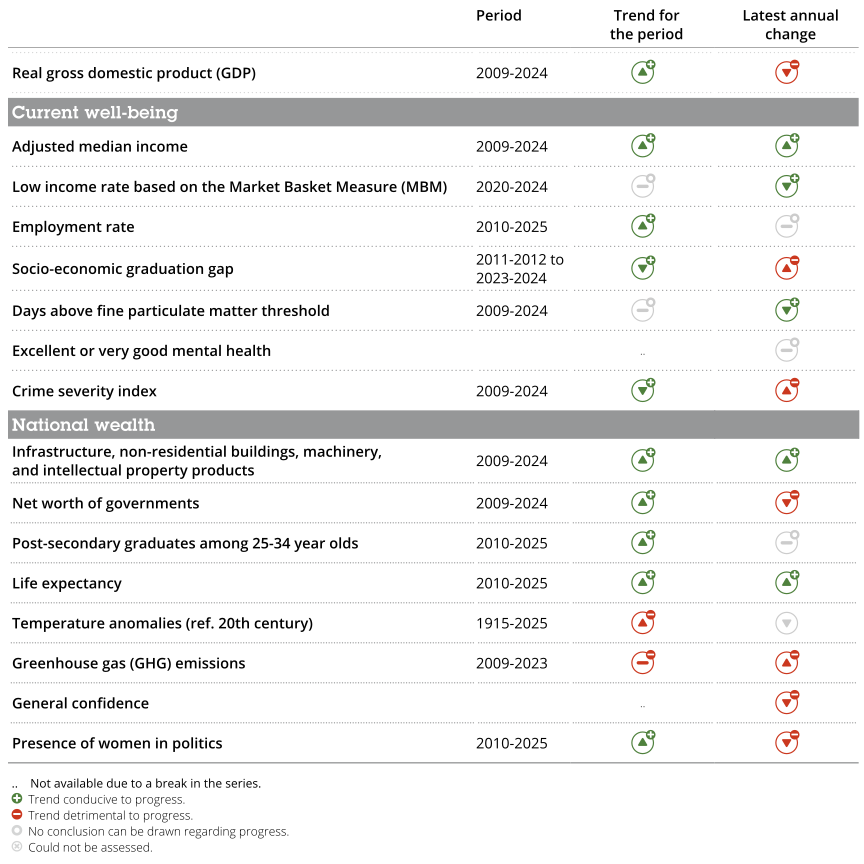
Long-term trends are generally conducive to progress
Over the past 15 years, several indicators have shown improvements, including income, the employment rate, life expectancy, post-secondary graduates among those aged 25 to 34, and the value of infrastructure, non-residential buildings, machinery, and intellectual property products.
However, indicators related to natural capital—namely temperature anomalies and greenhouse gas emissions—have been following long-term trends that are detrimental to progress.
Recent changes to be monitored
Recently, certain indicators have experienced changes that deviate from these generally positive long-term trends, but not enough to reverse them. This is especially true for GDP per capita.
The pattern is similar for the graduation gap between students from advantaged and disadvantaged backgrounds, the crime severity index, the presence of women in politics, and the net worth of governments.
Read the results analysis (in French only) (PDF, 3 MB)
View the Québec Progress Indicator dashboard (in French only)
Additional information
Although Québec society is trending in the right direction, inequalities persist between women and men. Additional progress indicator analyses that focus on well-being inequalities between women and men in terms of quality of life, human capital and social capital are also available.
The Institut de la statistique du Québec is the public body responsible for providing reliable, objective statistics about Québec society. The relevance of its work makes it a strategic ally for decision makers and an essential source of information for all those wishing to learn more about Québec.