
Québec, August 12, 2025. – Three years after obtaining their post-secondary degree, how have 2020 graduates integrated into the labour market?
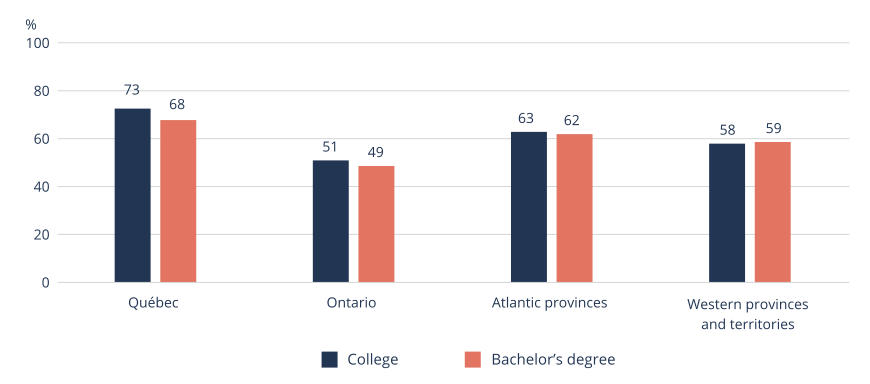
In Québec in 2023, 73% of college graduates and 68% of graduates with a bachelor’s degree were working in a job closely related to their field or specialty. The percentages were higher than elsewhere in Canada, which indicates a better match between training and employment in Québec.
These are the highlights of the Situation sur le marché du travail en 2023 des nouveaux diplômés du postsecondaire au Québec – promotion 2020, released today by the Institut de la statistique du Québec.
Percentage of 2020 postsecondary graduates working in a job closely related to their field in 2023
Source
Statistics Canada, National Graduates Survey, 2023 (Class of 2020). Adapted by the Institut de la statistique du Québec.
Graduates were more satisfied with their job and salary in Québec than elsewhere in Canada
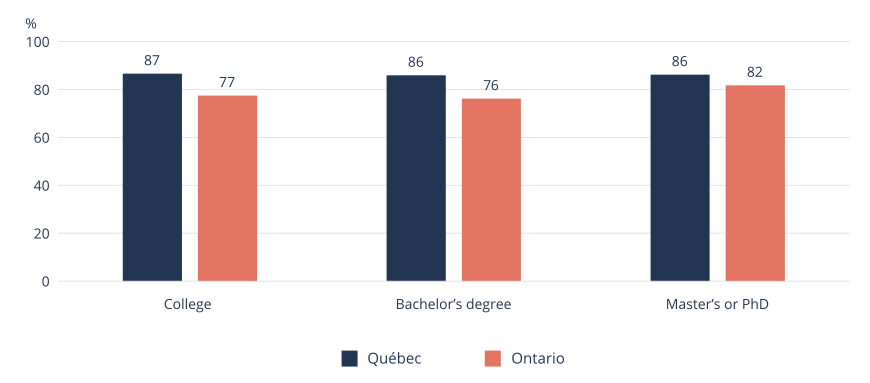
Job satisfaction among postsecondary graduates was higher in Québec: in 2023, approximately 86% were satisfied or very satisfied with their job, compared to approximately 76–82% in Ontario. The gap between the two provinces was more pronounced at the college and bachelor’s degree levels than at the master’s or PhD levels.
Québec also had the advantage over the Atlantic provinces, Western provinces and territories when it came to graduates with bachelor’s degrees (86% vs. 78%–79%).
Percentage of 2020 postsecondary graduates working in a job they said they were satisfied or very satisfied with, 2023
Source
Statistics Canada, National Graduates Survey, 2023 (Class of 2020). Adapted by the Institut de la statistique du Québec.
As for salary, the satisfaction level of post-secondary graduates was also higher in Québec than elsewhere in Canada:
- College: 59% vs. 48% (compared to Ontario);
- Bachelor’s degree: 66% vs. 52%;
- Master’s or PhD: 62% vs. 51%–56%.
Almost all graduates with a degree in education were working in a job that was closely related to their field
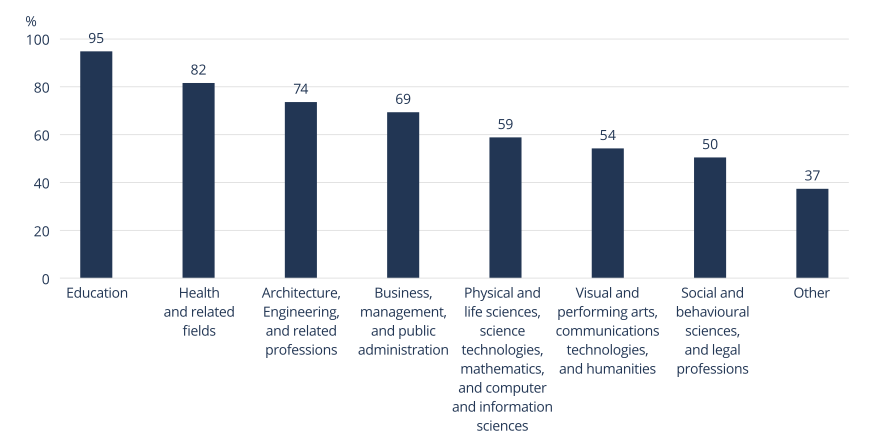
In 2023, 95% of graduates with a degree in education were working in a job closely related to their field. The proportion was 82% in the healthcare and related fields, but dropped to 50% in the social and behavioural sciences and in the field of law.
In addition, a higher proportion of college graduates in Québec than in Ontario had an employment income of $50,000–$69,999 in 2023.
Percentage of 2020 graduates with a bachelor’s degree employed in 2023 in a job closely related to their field or specialty, Québec, 2023
Source
Statistics Canada, National Graduates Survey, 2023 (Class of 2020). Adapted by the Institut de la statistique du Québec.
Would they choose the same field again or not?
In 2023, three years after graduation, 78% of college graduates in Québec said they would choose the same field or specialty if they had to do it again. This is higher than the percentages in Ontario (68%), the Atlantic provinces, the Western provinces and the territories (72%).
As for those with a bachelor’s degree, approximately 74% in Québec would choose the same field or specialty, compared to approximately 66% in Ontario and around 69% elsewhere in Canada. Québec also performed better than Ontario and the Atlantic provinces among those with a master’s or doctoral degree (84% vs. 77%–79%).
College degree: Includes a diploma or certificate from a college, CEGEP or other non-university institution.
Bachelor’s degree: Includes a university certificate or diploma below a bachelor’s degree, and the bachelor’s degree.
Master’s or PhD: Includes master’s and doctoral degrees.
L’Institut de la statistique du Québec produit, analyse et diffuse des informations statistiques officielles, objectives et de qualité sur différents aspects de la société québécoise. Il est le responsable de la réalisation de toutes les enquêtes statistiques d’intérêt général. La pertinence de ses travaux en fait un allié stratégique pour la prise de décision et une source d’information incontournable pour toutes les personnes qui désirent en connaître davantage sur le Québec.