
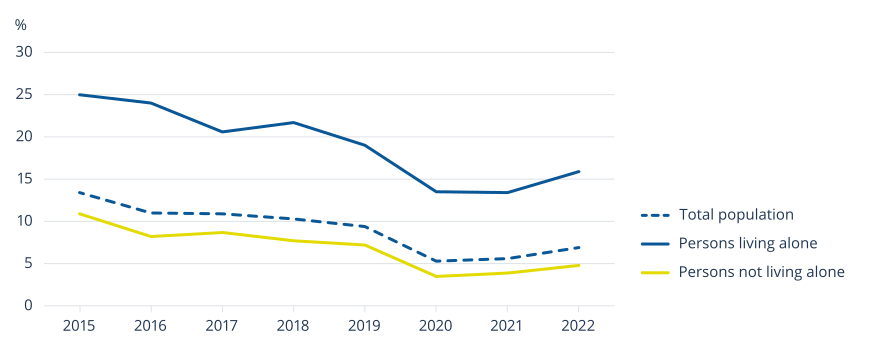
Québec, December 18, 2025. – In Québec, slightly more than 1 in 6 persons living alone were in a low-income situation in 2022, or about 211,400 people. The low-income rate was higher among persons living alone (16%) than among those not living alone (4.8%) according to the Market Basket Measure in 2022.
In general, the low-income rate has decreased in the overall population and among persons living alone since 2015. However, it increased in 2022 after dropping to a historic low in 2020 and 2021 due to the support measures related to the pandemic.
Low-income rate according to the MBM (2018 base), Québec, 2015 to 2022
Total population aged 16 and over, persons aged 16 and over living alone, and persons aged 16 and over not living alone
Notes
The difference between the rate for persons living alone and persons not living alone is statistically significant every year (at the 0.05 threshold).
The change in the rate between 2015 and 2022 is significant for all three groups (at the 0.05 threshold).
Download the file to see the confidence intervals for the estimates (XLSX) (in French only).
Source
Statistics Canada, Canadian Income Survey, 2015 to 2022. Adapted by the Institut de la statistique du Québec.
Comparisons with Canada
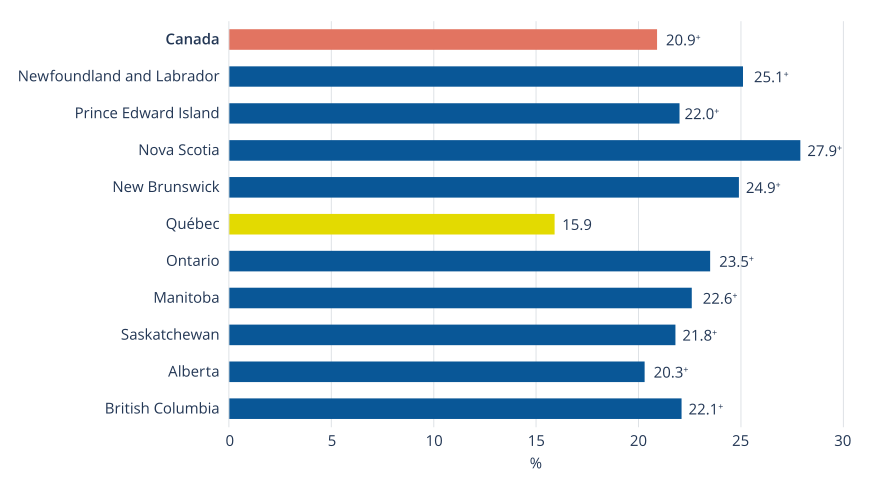
Québec has the lowest low-income rate among persons living alone of all the provinces. For Canada as a whole, this rate was 21% in 2022.
Low-income rate according to the MBM (2018 base), Canada and provinces, 2022
Persons aged 16 and over living alone
Notes
+ Indicates that the low-income rate for the province in question is significantly higher than for Québec at the 0.05 threshold.
Download the file to see the confidence intervals for the estimates (XLSX) (in French only).
Source
Statistics Canada, Canadian Income Survey, 2022. Adapted by the Institut de la statistique du Québec.
The situation in Québec’s regions
At the regional level, Montréal has the highest low-income rate (19% in 2020). In the province, nearly 4 in 10 people in low income live in the Montréal region.
Some groups are more impacted than others
There are substantial differences in low income based on sociodemographic characteristics. The low-income rate among persons living alone in Québec is higher for:
- Men (16%), for whom a significant difference was observed for the first time compared with women (13%)
- Youth aged 16 to 24 (40%, or about 13,500 people), including 79% who were attending an educational institution full time
- People aged 45 to 64 (24%, or 56,400 people)
- People with a high school education or less (20%, or 97,100 people)
- People belonging to a visible minority (23%, or 33,000 people)
- People with a disability (19%, or 80,100 people)
What is the income level and main source of income of low-income persons living alone? What percentage of them are in the labour market and what are their housing conditions? How does their situation compare to that of persons living alone who are not in low income? Are there any differences between men and women? To learn more:
View the statistical compendium
What is the Market Basket Measure?
The Market Basket Measure (MBM) is based on the cost of goods and services that make up a “market basket” deemed essential for a family unit to meet its basic needs. The basket includes five components: food; shelter; transportation; clothing and shoes; and other necessities. The cost of the basket for a family unit—which is adjusted according to the number of people in the unit and its region of residence defined for the MBM—is compared to the family unit’s disposable income for the MBM. The latter is calculated by subtracting certain non-consumption expenses, such as social contributions and medical expenses, from after-tax income.
L’analyse a été réalisée à la demande du ministère de l’Emploi et de la Solidarité sociale et s’inscrit dans le cadre de la Stratégie gouvernementale pour l’égalité entre les femmes et les hommes 2022-2027 (PDF).
The Institut de la statistique du Québec produces, analyzes and disseminates official, objective and quality statistical information on various aspects of Québec society. It is responsible for conducting all statistical surveys of general interest. The relevance of its work makes it a strategic ally for decision makers and an essential source of information for all those wishing to learn more about Québec.