
Québec, September 26, 2022. – The participation rate of Quebecers aged 55–69 has grown steadily over the past 20 years. Women experienced the strongest growth, and as a result the gap with men has narrowed significantly. Women are also more likely than men to retire earlier in their lives. Moreover, the size of the workforce aged 15–69 in Québec is now proportionately larger than in Ontario. These findings come from an analysis entitled Participation au marché du travail des travailleurs plus âgés au Québec et intentions à l’égard de l’âge de la retraite published today by the Institut de la statistique du Québec.
Between 2001 and 2021, the participation rate increased from 55.1% to 77.6% for 55–59 year olds and from 29.6% to 53.6% for 60–64 year olds. In 2021, the participation rate among those aged 55 to 59 was 73% for women and 82% for men. The gender gap in this age group decreased from about 23 points in 2001 to less than 10 points in 2021. Among 60–64 year olds, the participation rate in 2021 was 46% for women and 62% for men. The gap in this age group therefore narrowed from 24 to 16 percentage points.
Participation rate among 55–69 year olds by sex, Québec, 2001-2021
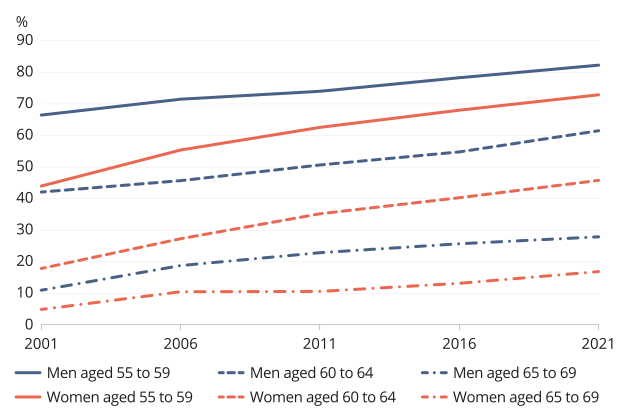
Source : Statistics Canada, Labour Force Survey, 2021. Adapted by the Institut
The size of the workforce aged 15–69 is now larger in Québec than in Ontario
An analysis of labour force participation rates for people aged 15 to 69 shows that the size of the labour force is proportionately higher in Québec than in Ontario, due to the higher labour force participation of people aged 15 to 54. However, Ontarians aged 60 to 69 had a higher participation rate than their Québec counterparts.
Women are more likely than men to leave the labour market earlier than most people
In terms of intentions for full retirement, the majority of those aged 45 and over in 2018 were planning to leave the workforce permanently at age 65 or older, and about 30% were planning to leave at age 60 or younger. About one-third of women planned to fully retire at age 60 or younger, compared to less than one-quarter of men.
Apart from women, those most likely to fully retire earlier than most people are:
- people with vocational, technical or university education;
- people with more job seniority (20 years or more);
- people with employment earnings in the top quartile (annual income of $79,000 or more in 2018);
- salaried workers (as opposed to self-employed workers);
- public sector employees; and
- people whose job is covered by a collective agreement.
Proportion of employed persons aged 45 and over who were planning to retire permanently before age 65, Québec, 2018
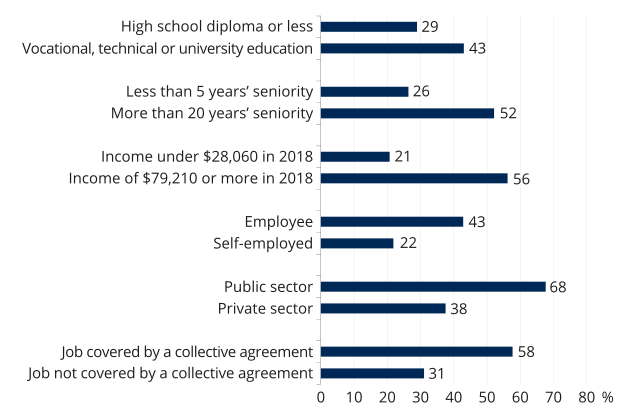
Target population: Employed persons aged 45 and over living in Québec.
Source: Statistics Canada, Longitudinal and International Study of Adults, 2018. Adapted by the Institut de la statistique du Québec.
The data in this analysis come from Statistics Canada’s Labour Force Survey and Longitudinal and International Study of Adults.
Read the full article (PDF, 1.47 MB)
Portrait of job vacancies in Québec and its regions
The Institut de la statistique du Québec also released today a portrait of non-seasonally adjusted job vacancies in Québec in the second quarter of 2022. It shows that there were approximately 252,000 vacant positions in Québec. Compared to the same quarter in 2021, this number was up by about 60,000 (31%). Comparisons between regions and provinces and by occupation or industry are presented, as well as data on the compensation offered in the positions that are vacant.
The Institut de la statistique du Québec produces, analyzes and disseminates official, objective and quality statistical information on various aspects of Québec society. It is responsible for conducting all statistical surveys of general interest. The relevance of its work makes it a strategic ally for decision makers and all those wishing to learn more about Québec.