
Montréal, February 3, 2026. – In 2024, approximately 59% of the Québec workforce had a job with high exposure to artificial intelligence (AI), or about 2,700,000 people. The AI exposure rate in Québec is similar to that in Canada overall.
Occupations held by women are more exposed to AI
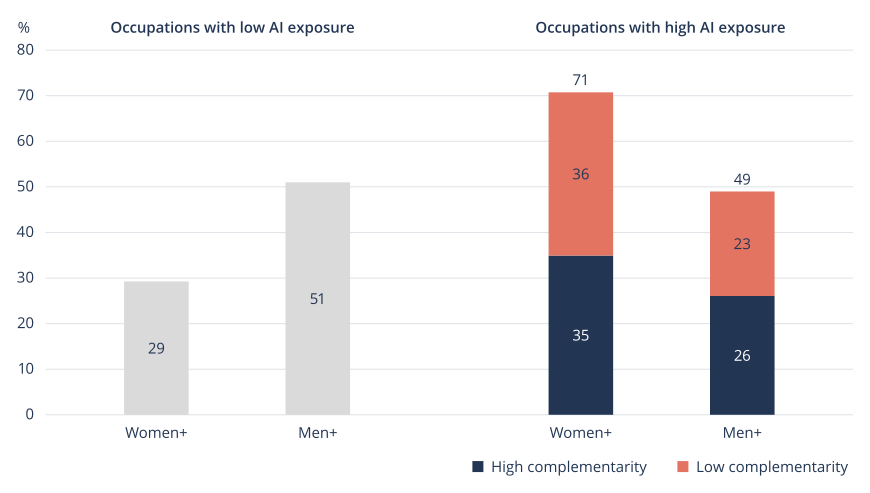
Women are more likely than men to be exposed to AI in their job (71% vs. 49%). This is due to the industrial and occupational composition of employment by gender, as men are more concentrated in production occupations that are less likely to be affected by AI.
More specifically, women are more exposed to AI than men in terms of both high-complementarity occupations (35% vs. 26%), meaning occupations that could benefit from this technology, and low-complementarity occupations (36% vs. 23%), meaning occupations where tasks could be transformed or replaced by this technology.
Distribution of total employment by gender according to occupational exposure to artificial intelligence and complementarity, population aged 15 and over, Québec, 2024
(in percentages)
Note
High-exposure, high-complementarity occupations are those that could benefit from this technology, while high-exposure, low-complementarity occupations are those where tasks could be impacted by this technology.
Sources
Mehdi and Morissette, Experimental Estimates of Potential Artificial Intelligence Occupational Exposure in Canada, 2024.
Statistics Canada, Labour Force Survey, 2024. Adapted by the Institut de la statistique du Québec.
University-educated individuals more likely to be exposed to AI
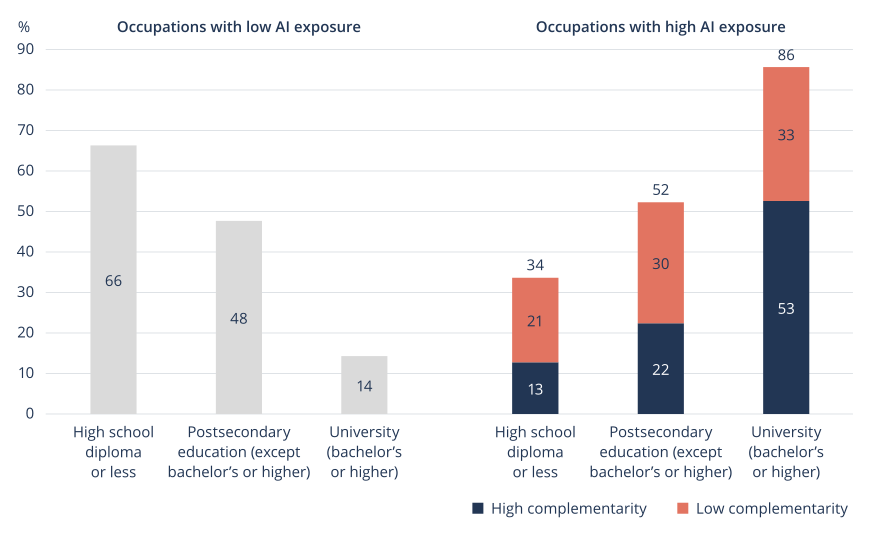
Given that AI is increasingly capable of performing cognitive and non-routine tasks, high-skill occupations (those requiring postsecondary education, especially at the university level) are expected to have a higher risk of AI exposure. In 2024, about 86% of jobs held by individuals who are university educated (bachelor’s degree or higher) were in occupations with high potential AI exposure. In contrast, only about a third of those with a high school diploma or less are exposed to AI in their jobs.
Distribution of total employment by education level according to occupational exposure to artificial intelligence and complementarity, population aged 15 and over, Québec, 2024
(in percentages)
Note
High-exposure, high-complementarity occupations are those that could benefit from this technology, while high-exposure, low-complementarity occupations are those where tasks could be impacted by this technology.
Sources
Mehdi and Morissette, Experimental Estimates of Potential Artificial Intelligence Occupational Exposure in Canada, 2024.
Statistics Canada, Labour Force Survey, 2024. Adapted by the Institut de la statistique du Québec.
Teleworkable occupations are highly exposed to AI
Virtually all teleworkable occupations are highly exposed to AI. These occupations often require postsecondary training, especially at the university level, and are therefore more likely to be highly exposed to AI. For their part, the vast majority (about 69%) of occupations where telework is impossible have low AI exposure.
A large proportion of jobs in Capitale-Nationale, Montréal and Outaouais are highly exposed to AI
In 2024, approximately two thirds of jobs in the regions of Capitale-Nationale, Montréal and Outaouais were highly exposed to AI. In these regions, higher occupational exposure to AI can be explained by the greater presence of employment in the fields of public administration, finance, insurance, real estate and leasing, and professional, scientific and technical services.
To learn more about potential occupational exposure to AI in Québec in 2024
Read the full report (in French only) (PDF 920 ko) for complementary data, including on age, hourly earnings and industries. The estimates presented were calculated using data from Statistics Canada’s Labour Force Survey and are based on the complementarity-adjusted potential AI occupational exposure index.
The Institut de la statistique du Québec produces, analyzes and disseminates official, objective and quality statistical information on various aspects of Québec society. It is responsible for conducting all statistical surveys of general interest. The relevance of its work makes it a strategic ally for decision makers and an essential source of information for all those wishing to learn more about Québec.