
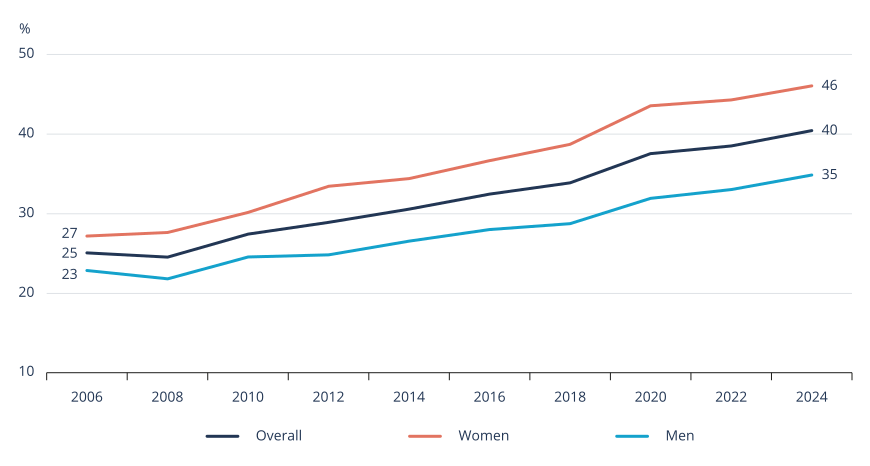
Montréal, December 2, 2025. – Between 2006 and 2024, the number of university graduates (bachelor’s degree or above) who have a payroll job almost doubled and reached more than one million in 2024. This growth was stronger among women (+300,000) than men (+210,000). These changes have led to an increase in the share of university graduates in the workforce, especially among women (46% in 2024).
Share of payroll jobs held by university graduates (bachelor’s degree or above) by gender, people aged 25 to 54, Québec, 2006–2024Share of payroll jobs held by university graduates (bachelor’s degree or above) by gender, people aged 25 to 54, Québec, 2006–2024
Notes
Data are rounded to the nearest 10. Data are rounded to the nearest 10.
Management positions are included.Management positions are included.
Source
Statistics Canada, Labour Force Survey, 2024. Adapted by the Institut de la statistique du Québec. Statistics Canada, Labour Force Survey, 2024. Adapted by the Institut de la statistique du Québec.
The share of university graduates who hold jobs that match their education level remains unchangedThe share of university graduates who hold jobs that match their education level remains unchanged
A majority or university graduates have jobs that match their education level. In 2024, this proportion stood at about 66% for women and 59% for men. Among people born in Québec or elsewhere in Canada, this share increased from 66% in 2006 to 74% in 2024.A majority or university graduates have jobs that match their education level. In 2024, this proportion stood at about 66% for women and 59% for men. Among people born in Québec or elsewhere in Canada, this share increased from 66% in 2006 to 74% in 2024.
Wage premium for people in jobs that require a university degree has increased since 2006 Wage premium for people in jobs that require a university degree has increased since 2006
In 2006, among women aged 25 to 29 who held a job that usually requires a university degree, the wage premium over those who had a job requiring at most a high school diploma was 63%. In 2024, when these women were aged between 43 and 47, the wage premium was around 93%. Among women aged 30 to 34 in 2006, the premium rose from about 78% to 99% over the same period. Among men, the wage premium has also increased significantly in both of these age groups, especially among those aged 25–29, rising from 53% in 2006 to 92% in 2024. In 2006, among women aged 25 to 29 who held a job that usually requires a university degree, the wage premium over those who had a job requiring at most a high school diploma was 63%. In 2024, when these women were aged between 43 and 47, the wage premium was around 93%. Among women aged 30 to 34 in 2006, the premium rose from about 78% to 99% over the same period. Among men, the wage premium has also increased significantly in both of these age groups, especially among those aged 25–29, rising from 53% in 2006 to 92% in 2024.
To learn more about employment and compensation among university graduatesTo learn more about employment and compensation among university graduates
Read the full report (PDF in French Only) that provides complementary data, including on average hourly earnings by education level and immigration status.