
Québec, October 27, 2025. – The Institut de la statistique du Québec published today the Panorama des régions du Québec (PDF), which provides a portrait of the province’s 17 administrative regions according to 7 themes: demography, the labour market, GDP, per capita disposable income, family living conditions, health, and culture. The publication also includes a special section dedicated to regional county municipalities (RCMs).
Unemployment rate little changed in 2024
Between 2023 and 2024, the unemployment rate among people aged 15 to 64 increased slightly in Québec but was little changed in most regions. However, it increased significantly in the regions of Capitale-Nationale, Montréal, Outaouais, and in the combined regions of Côte-Nord and Nord-du-Québec. Despite this recent increase, Québec’s unemployment rate remains lower than it was in the early 2000s.
Slowdown in GDP growth in the vast majority of regions
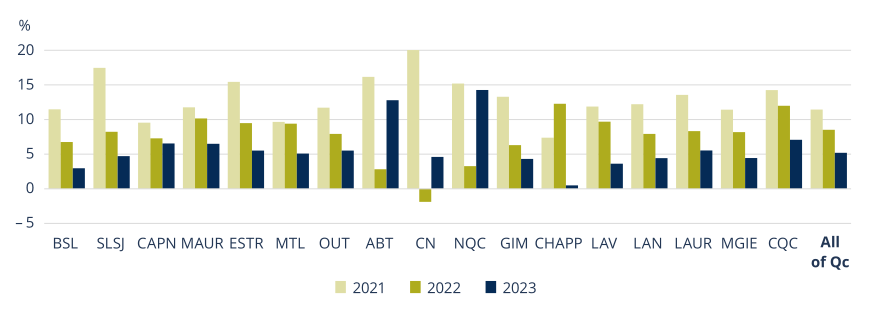
In 2023, GDP growth at basic prices in current dollars slowed down in the province overall and in all its regions, except for Côte-Nord, Nord-du-Québec, and Abitibi-Témiscamingue. The latter two regions recorded the largest growth in Québec, especially because of the mining sector.
Annual change in GDP at basic prices, in current dollars, administrative regions and all of Québec, 2021 to 2023
Sources
Institut de la statistique du Québec; Statistics Canada; Ministère des Affaires municipales et de l’Habitation; Fisheries and Oceans Canada; and Revenu Québec. Compiled by Institut de la statistique du Québec.
Decrease in median after-tax income of families
In virtually all regions, median after-tax income declined in real terms in 2023 for both couple families (with or without children) and single-parent families.
Gaspésie–Îles-de-la-Madeleine and Côte-Nord recorded the steepest declines among couple families. The sharpest drops for single-parent families were in Nord-du-Québec, Côte-Nord, and Bas-Saint-Laurent.
Contrasting demographic and economic situations between RCMs in metropolitan areas and those far from large centres
In this edition of Panorama des régions du Québec, a new typology of RCMs developed by the ISQ makes it easier to understand the territorial dynamics at play according to selected indicators. Based on this typology, two thirds of the Québec population lives in RCMs located in large or medium-sized metropolitan areas. Generally, these RCMs experienced strong population growth in recent years, while also having a higher rate of workers than the provincial average. In addition, people living in these areas tend to have a higher income level.
The situation is quite different for RCMs in non-metropolitan areas, especially those that are far or very far from urban or metropolitan areas. Population growth is generally lower, and even negative in some of them. The average value of single-family homes is well below the value observed in Québec as a whole, and a smaller proportion of people are employed.
Comparisons according to RCM typology based on metropolitan influence
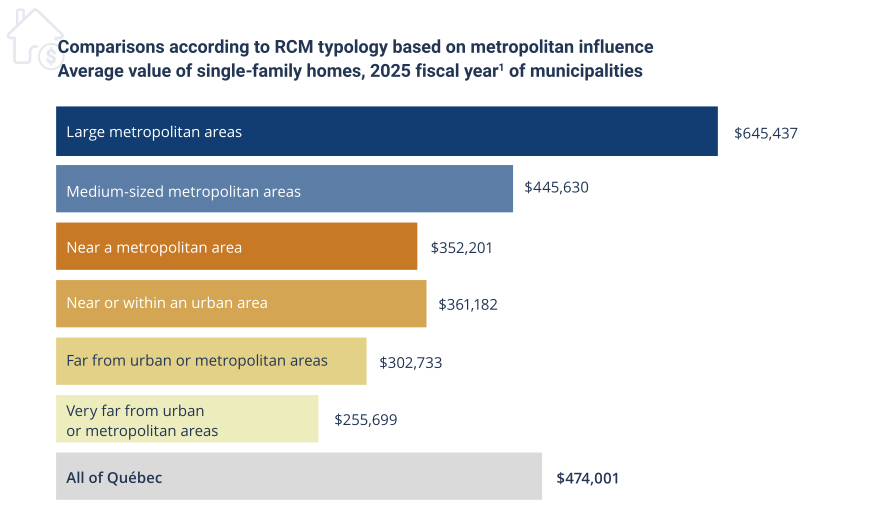
1. The standardized property values for a municipality’s fiscal year reflect the values established based on the real estate conditions 18 months prior to the start of that fiscal year. Values for the 2025 fiscal year represent the market value of properties as of July 1, 2023.
Source
Ministère des Affaires municipales et de l’Habitation, Summaries of municipalities’ property assessment rolls. Compiled by the Institut de la statistique du Québec.
The Panorama des régions du Québec presents the most recent data at the time it is prepared. For updated data, please visit the Institut’s website at statistique.quebec.ca.
See also
Read the full publication (PDF, 16.4 MB)
Read the regional statistical portraits
The Institut de la statistique du Québec produces, analyzes and disseminates official, objective and quality statistical information on various aspects of Québec society. It is responsible for conducting all statistical surveys of general interest. The relevance of its work makes it a strategic ally for decision makers and an essential source of information for all those wishing to learn more about Québec.