
How has the cultural sector changed over the past 25 years in Québec?
Québec, January 29, 2025. – Did you know that between 1998 and 2023, the number of movie theatres in operation in Québec decreased by 22%, from 119 to 93? And that over the same period, the number of Québec films shown in theatres rose by 316%, from 31 to 129? For its 25th anniversary, the ISQ has drawn on its work in different fields to release several statistical portraits on the evolution of Québec. The portraits released today focus on culture and civic engagement.
Attendance down for theatre, up for comedy
Attendance at performing arts shows in Québec remained relatively stable between 2004 and 2016 before rising significantly between 2017 and 2019. In 2022, performance venues recorded 7.6 million admissions, which is comparable to the 2015–2019 pre-pandemic average.
However, showgoer habits have changed. In 2004, theatre performances had the highest share of admissions (24%), while in 2022, comedy shows ranked first (21%). Between 2004 and 2022, attendance declined by 35% for theatrical performances but increased by 63% for comedy shows.
Music industry turned upside down
In 1999, only 15% of the population listened to music on the Internet. The most popular musical genre was pop rock, which a quarter of the population listened to at the time. The most common ways of listening to music were FM radio, CDs, vinyl records, and audio cassettes.
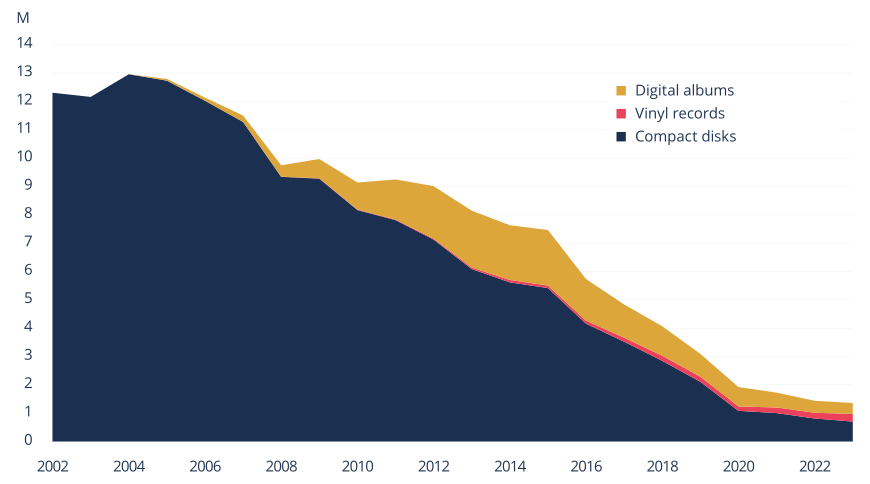
Only 700,000 CDs were sold in Québec in 2023 compared to 12.3 million in 2002. In contrast, on-demand music streaming has been growing, with nearly 28 billion streams on music streaming platforms in 2023.
Pop and R&B, hip-hop and rap are the top two musical genres streamed on these platforms in Québec, at 29% and 22%.
Album sales by format, Québec, 2002 to 2023
Source
Luminate Data. All rights reserved.
Compilation
Institut de la statistique du Québec, Observatoire de la culture et des communications du Québec.
Share of workforce in culture and communications occupations higher in Québec than in the rest of Canada
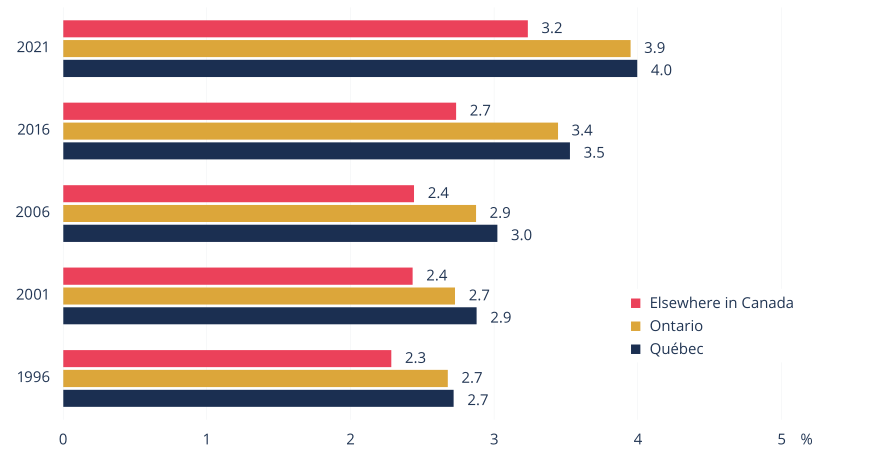
Over the past 25 years—between 1996 and 2021—the share of the workforce in culture occupations has increased from 2.7% to 4% of the labour force, which reflects the vitality and development of our cultural industries. Also, in 2021, the proportion of women in culture occupations stood at 54%, up 5 percentage points from 25 years ago.
The share of the workforce in occupations related to culture and communications is higher in Québec than in Ontario or elsewhere in Canada.
Share of workforce in culture and communications occupations among the experienced labour force, Québec, Ontario, and elsewhere in Canada, 1996 to 2021
Source
Statistique Canada, Recensement de la population de 2021, 98100449
Compilation
Institut de la statistique du Québec, Observatoire de la culture et des communications du Québec.
Share of culture in GDP stable
Over the past few years, the share of culture in GDP has remained relatively stable at about 3.5% on average. Relative to Québec’s economy overall, the share of culture industries stood at 3.4% in 2022, or about 17.4 billion dollars.
More publications on Québec’s evolution over the past 25 years will be released in the coming months. Sign up for email notifications so you don’t miss anything.
For 25 years, the Institut de la statistique du Québec has been producing, analyzing, and disseminating official, objective and high-quality statistical information on various aspects of Québec society. It is responsible for conducting all statistical surveys of general interest. The relevance of its work makes it a strategic ally for decision makers and an essential source of information for all those wishing to learn more about Québec.